Monday, 7 April 2014

Claustral Canyon: A mission thwarted

Claustral Canyon, coveted and revered for its reputation as both a challenging and spectacular canyon. It’s a long day, particularly since a change to the access route added a few hours on to the walk-in. It’s also been the site of numerous rescues and the tragic loss of a group of canyoners. Why? After two abseils down waterfalls, the third abseil starts by plunging through a small opening in the rocks, known as the keyhole. In the slot canyon, any rainfall can raise the water level to block the keyhole, trapping canyoners with waterfalls behind as the water rises.

Claustral canyon is dangerous with even the prospect of rain, and we had to know just what odds we faced before attempting it. Rising long before dawn on Saturday morning, we gathered around smartphones that struggled for reception in the depths of Megalong Valley. When a brief signal broke through, it illuminated the stark reality of our situation. Possible thunderstorms were predicted throughout the mountains.

Thunderstorms are the great enemy of canyoning, causing flash floods to roar unexpectedly through the narrow slots cut into the sandstone mountains. Even short canyons can be deadly if a storm crosses through their catchment. A long day in a slot canyon with no escape routes and a compulsory abseil that could be easily flooded was out of the question. There were a few bad weather alternatives available. We chose one that I had used before when storms swept across the mountains.

Malaita Walls is a popular abseiling destination near Katoomba. A multi-pitch abseil down the cliffs rather than a canyon, it has zero chance of flash-flooding, some spectacular views, and is utterly exposed in both senses of the word.


We donned harnesses, piled ropes into our packs and set off down the short access track. It brought us to the mass of chains that make up the first anchor, some leading to bolts, others wrapped around rock formations. It’s one of the most substantial anchors I’ve used, reassuring when swinging over the edge of a 70m cliff, with unobstructed views of the valley below. Leaning out and looking down, you can see a rock outcrop 45m below you, the end of the first pitch. At least, you can usually see an outcrop.

Although the skies were clear overhead, fog filled the valley below us. Stepping off the edge to start the abseil, my destination was hidden by the swirling vapours below. Although I knew it was there, and that four people had reached it safely ahead of me, I was struck by a sudden spike of fear when confronting that wall of white. 

My old fear of heights has largely been scared away since I started abseiling. It could only withstand so many instances of me stepping off cliffs and throwing myself past overhangs to dangle in the open air. Occasionally though, its remnants rear their head. Descending, knowing I had to swing to the side but unable to see my destination, I had the mixed sensations of serenely descending through the tranquillity of a beautiful setting and the internal screaming from part of me that was convinced I was going to fall into that unknown at any moment. That juxtaposition is quite possibly what I love most about abseiling.
It was an uneventful descent, the mists punctured by the constant calls of an army group on the neighbouring route of Malaita Point. Their shouted communications echoing down the valley gave an impression of a well organised and professional group... although this impression was somewhat dampened by a call of "You're on pitch four, numbnuts!" and the distinctly audible argument that followed.

Our own abseils went smoothly, including the usual dry-canyoning balancing act of not moving too painfully slowly, but also not going so fast that out ATCs would heat up and melt the dry rope.

Photo courtesy of
Jessica Rose.
Emerging onto the tourist trail at the end of the route, we started making our way back up the seemingly endless staircase that snakes its tortuous way up cliffs that are far easier to abseil down. A lookout at the base of a waterfall provided a break for lunch, and led us to contemplate abseiling the falls.

Photo courtesy of Jessica Rose.
Distractions and temptation to go straight back down the cliff aside, we did reach the clifftop tourist centre eventually and made for another tourist destination. A quick check of a Norwegian weather forecast showed we were in the clear for a brief dabble in a wet canyon, and we were soon donning wetsuits for a trip down Empress Canyon. The canyon is packed with tourists during the late morning and early afternoon, but was quiet by the time we entered the water. Starting higher on this trip than on my last trip, we got in an extra couple of jumps before reaching the main trail head.

Empress Canyon has a nice mix of jumping, scrambling and sliding, all within its beautifully sculpted, narrow confines. My white water instincts kicked in partway down, screaming that it was not appropriate to scramble through a boulder sieve just because the water made it look easy, but it was otherwise uneventful. The canyon ends with an abseil down a waterfall, dropping straight into a waterhole that's a popular destination on a hot summer's day. I had missed the abseil on my previous trip, and did so again on this one. Worried about being caught behind a traffic jam at the top of the abseil, we'd left harnesses and rope in the cars. By the time we reached the anchors, there was no chance of having to queue up; the area was deserted. But, without any gear, we had to turn around and scramble back up the canyon to the access track. It was no great chore, since canyons are as much fun to go up as down, but the abseil will continue to taunt me until the next storm is forecast on a canyoning weekend.

Related Posts:

For another take on the days events, not to mention some excellent photos, check out the trip report on Words and Wilds.

Monday, 24 March 2014

Blue Mountains Extravaganza 2014

A campsite sits tranquil and calm, a bare handful of campers spread out across the wide clearing. The air lies cool and still, laden with the promise of rains to come, but content to hold back its damping mists for now.

Gravel crunches, light flaring and sending shadows dancing through and around the trees. A car swings off the road, headlights sweeping across the campsite as it weaves its way to a halt. The engine’s rumble cuts off, plunging the campsite back into silence. Serenity returns, darkness creeping in to cover the camp once more.

Another droning engine cuts through the night, then another and another. Trickling slowly at first, but soon rising to a torrent, they stream into camp. Headlights blossom, chasing the shadows and pushing them back into the trees. People are everywhere, the beams of their headtorches rounding up the remaining shadows. All remnants of tranquillity are gone; the ANU Mountaineering Club has arrived in force.

The Blue Mountains Extravaganza is one of several annual mass-migrations from Canberra, filled with adventure seekers. In winter, they migrate south to the frozen landscape of the Snowy Mountains, bearing skis and crampons. Late spring sees them carrying their cocktail dresses and suits into the Budawangs. Summer finds them in Namadgi, feasting atop Baroomba. Autumn carries them east to the coast with kayaks and climbing shoes in tow. In the shoulder season, as summer relinquishes its grip, the pilgrims seeks the Blue Mountains with every canyoning and climbing rope they have. A long weekend in the ACT provides ample incentive for the trip, while a lack of a corresponding public holiday in NSW means the mountains aren’t overly crowded. Perfect.

The basecamp location changes every few years, meandering between those large enough to contain the mass arrival of cars and people. There are many such campsites, of course, but few that are conveniently close to canyons, sport and trad climbing, but aren’t so far down back roads that the convoy arriving late on Friday night risks getting lost on the way there. This year’s choice was Megalong Valley, near the town (and bakeries) of Blackheath.

Every morning for three days, a dozen different trips set off into the surrounding wilderness, a scatter of beginners among participants largely made up of trip leaders. This is their weekend, a chance to plunge into a canyon that’s been lurking on their to-do list for a few seasons, spend a day working on a multi-pitch climb whose top has thus far eluded them, or enjoy the novelty of taking part in someone else’s trip. There are still beginner trips but, more so than on most mass-pilgrimages, they are in the minority.

Attending with virtually no canyoning experience in 2013, I had spent most of my weekend on two beginner-friendly bushwalking trips. This year, I was preparing myself for a few new challenges. Among the many trips on offer, most of them heading to destinations on my to-do list, I set out with the aim of conquering Claustral Canyon, BowensCreek, and doing my first lead climb at Dam Cliffs.

Tent pitched after the long after-work drive, and the weekend ahead filled with the promise of adventure, I slept soundly on Friday night... at least until the alarm raised its voice in the darkness, a harbinger of troubles to come.

Day 1: Claustral Canyon

Day 2: Bowens Creek

Wednesday, 19 February 2014

DIY Sous Vide: Outlining the task ahead

I started hearing about accurately controlled water baths used in cooking a few years ago, but only took an interest in them when talking food with one of the staff at my favourite café. He'd been playing with sous vide at home using one of the new controllers that quite neatly take a plug-in slow cooker or rice cooker and turn it into a precise water bath.

Trying to cook some pieces of the notoriously temperamental kangaroo a few weeks later, I tried my hand at a crude and labour-intensive water bath. It involved a digital thermometer suspended in a pot of water, a gas stove, and almost constant manual adjustments. Extreme 'though this effort was, the tenderness of the resulting meat made a sous vide setup extremely tempting.

The existing home controllers sound great, but I enjoy designing and building my own cheap workarounds, not just buying someone else's. So that is my project: design and build a simple-to-operate sous vide waterbath.

Of course, sous vide presents a few problems. Firstly, the systems I'm trying to control run on 240V, well above the limit I'm allowed to work on without being a licensed electrician*. So I'll be attempting to work out an ELV (extra-low voltage) system to control the LV 240V components. I know that most DIY solutions involve illegal 240V wiring, but I'll try to keep this design above board. The proximity of electronic components to water is also a problem, but one that is far easier to overcome.

To guide me on my way through this project, here are the basic principles I'm trying to stick to:
  1. Wiring is to be legal (although this should go unsaid, it generally can't when the DIY initialism gets involved with electricity)
  2. As much as is possible, components are to be homemade
  3. Unit must be small enough to fit into our already crowded kitchen storage
  4. While in use, waterbath temperature must be maintained at set-point ±0.5°C while food is being added, and have a steady state temperature of set-point ±0.2°C.


Breaking up the design:
Sous vide systems consist of a few basic parts, some of which I'll be making and others I'll probably have to buy.

  • #1 Water Heater: DIY systems typically use either an off-the-shelf slow cooker/rice cooker, or a plastic tub and the heating element from a kettle. If I can find a legal way to do it, a variant of the latter approach appeals to me far more than the former.
  • #2 Water Circulation: Neglected in many home systems (including the commercially produced ones), appropriate water circulation through the water bath is critical for maintaining consistent temperatures. Otherwise distinct hot- and cold-spots will develop.
  • #3 Temperature Sensor: For simplicity and reliability, this will probably be a purchased thermocouple probe connected to my controller.
  • #4 Temperature Controller: This encompasses a range of sub-systems, including: input from the temperature probe, set-point adjustment and display, temperature display,  PID feedback control, feed-forward control (not really necessary, but I have been itching for an excuse to use it for a few years and I'll be trying to find a way to incorporate it into this) and a PWM output.
  • #5 Switching Module: The simplest product for this would be a SSR (Solid-State Relay) wired between the water heater and the 240V outlet, but that falls prey to the whole problem of being illegal.


Now, the keen among you may well point out that the entirety (apart from the feed-forward control) of #4 could be supplied by an off-the-shelf PID temperature controller, countless examples of which are available for purchase across the internet, but I do really want to integrate feed-forward control if possible, and most of these systems suffer from a few issues that I'll outline later.

* Those among you who are endowed with good memories may recall that I was an Electrical Engineer before retiring a little over a year ago, but being allowed to write a specification for an 11,000V generator is not the same as being allowed to tighten the screw on a 240V junction box.

Friday, 14 February 2014

Stop by Tunnel Vision Café for your morning brew

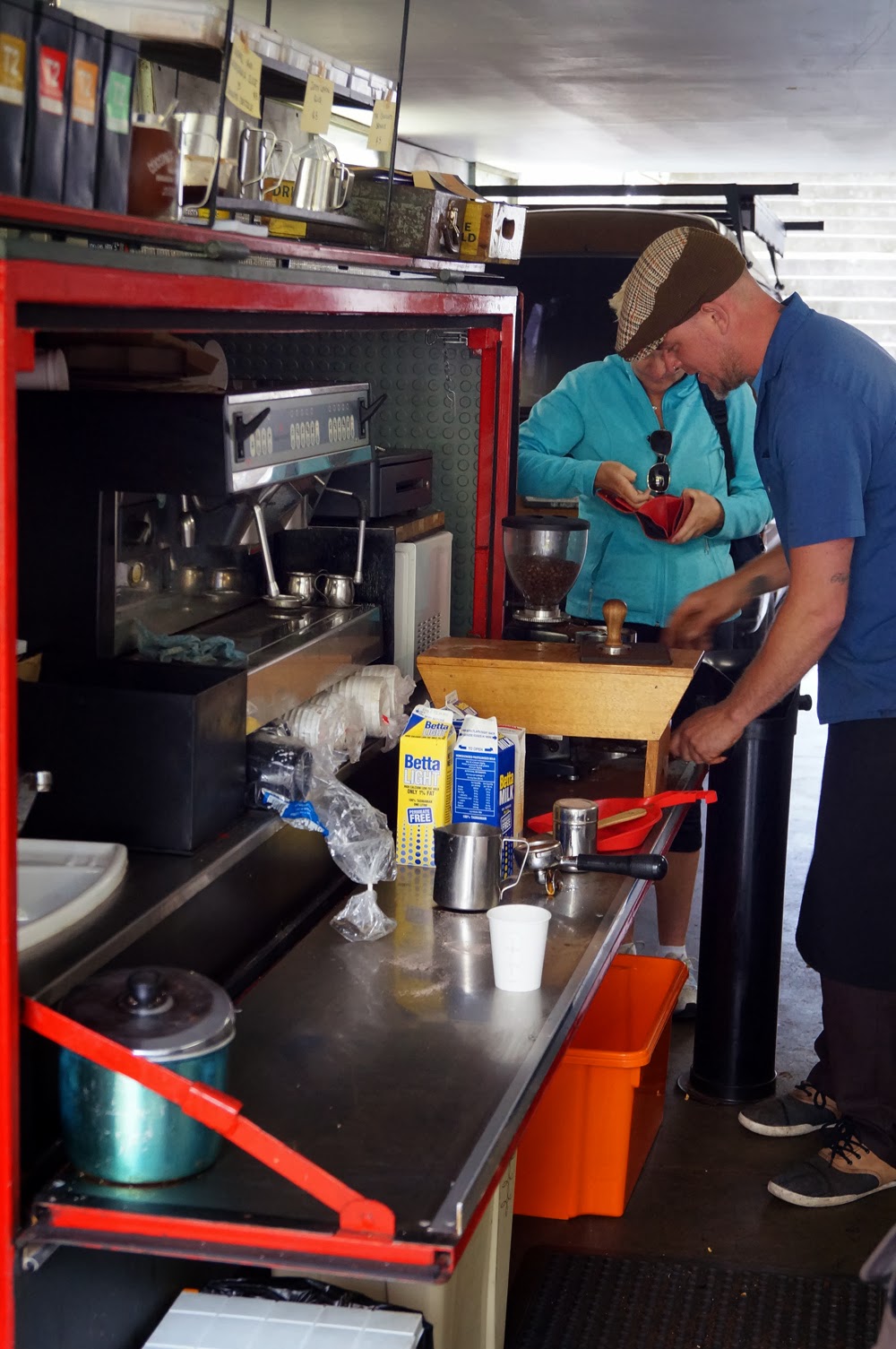
If you're making your way between the Hobart Aquatics Centre and the CBD, you might notice something odd when passing through the Railway/ABC/Fountain Roundabout: a van and trailer parked in the underpass. Odd though this may seem, the surrounding chairs and the wafting smell of coffee should explain its presence easily enough.

Tunnel Vision opened its trailer's doors in February 2013, and I was fortunate enough to come across this eccentric café just in time for its first birthday. Most of those who make their way through the tunnel are apparently determined not to say hello, let alone stop, but Tunnel Vision is building up a client base of regular customers. David—the café's owner—has an impressive memory for faces and knows many of his customers' usual orders well enough to start brewing before they have a chance to ask.

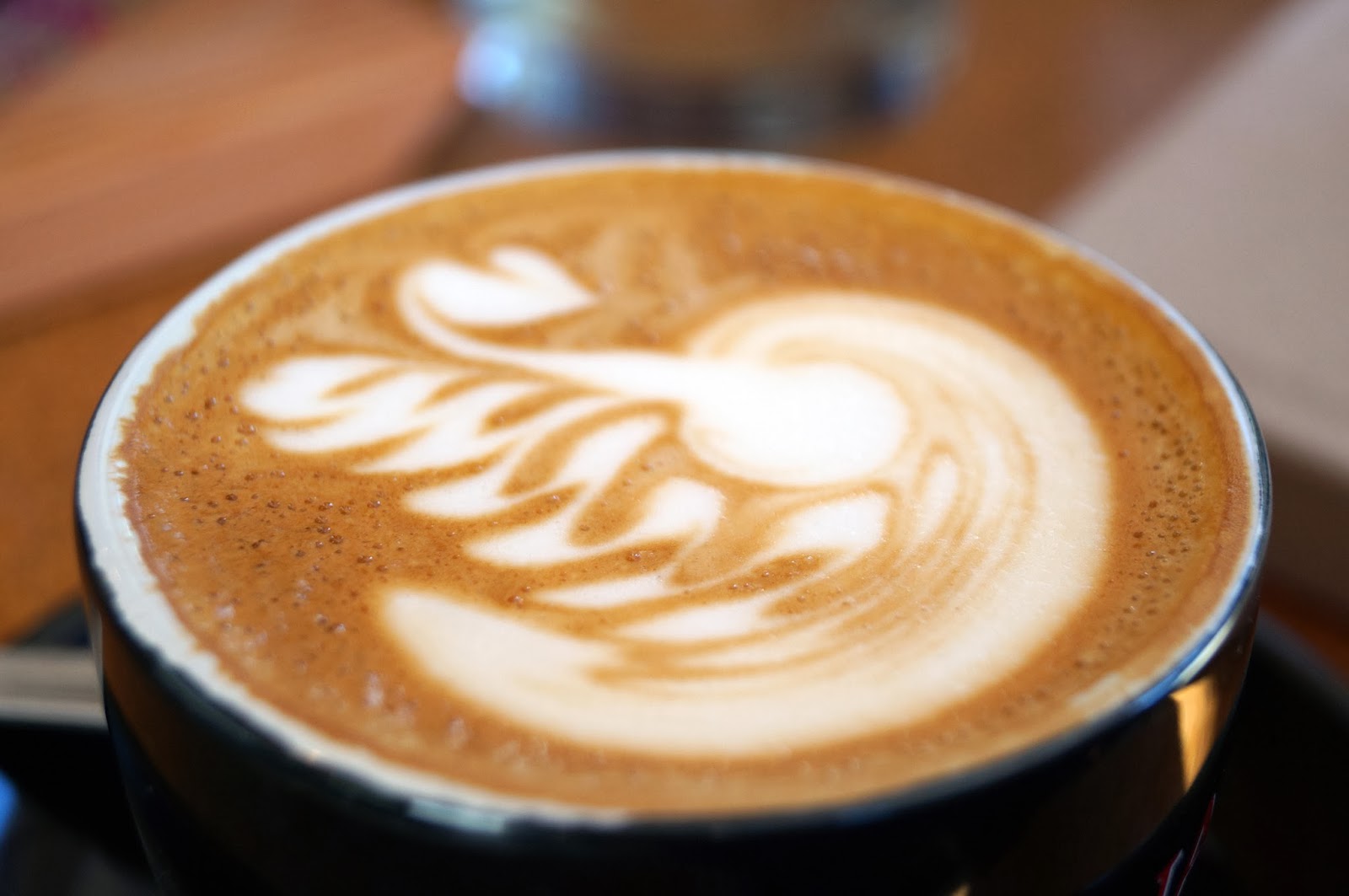
It's not difficult to see why those who do stop would choose to keep on stopping in the future. Tunnel Vision uses Five Senses Coffee, a West Australian roastery that has recently expanded to Victoria. The beans pour surprisingly well as a black coffee (impressively so for a blend) and superbly as a milk coffee. And if coffee isn't your thing, the other drinks on offer should more than make up for it. David makes his own syrup for chai lattes, a lightly spiced concoction with more subtlety than the usual sickly sweet mixes on offer. The real winner of the drinks menu is the spiced hot chocolate, flavoured with homemade ganache and chilli jam. This rich beverage, touched with hints of cinnamon and chilli, is an absolute must-try and ranks as one of the best spiced hot chocolates I've ever tasted.

A few chairs and picnic blankets are provided in case you feel like stopping for a while. After a full sit-down breakfast? The menu is limited to waffles, but the range of toppings on offer is anything but. Or you could just stand and chat with David for a while, sipping a drink from his most unusual cafe.

Monday, 27 January 2014

Canberra: In Pursuit of the Perfect Cuppa

Canberra sports a wide variety of coffee roasters and cafes, which range from the Melbourne-esque Lonsdale Street Roasters to ONA Coffee's South American themed Cupping Room. There is Gus's, laying claim to Canberra's first outdoor cafe seating, and Sly Fox, erected on trestle tables and milk crates each morning. Amid all the choices on offer, these are a few of my favourite Civic and Inner North* cafes.


#1 The Cupping Room, corner University Ave and London Cct, Civic
A relatively new arrival in Canberra, The Cupping Room is the latest venue to be opened by the award-winning Canberra coffee roasters, ONA Coffee. As well as their exceptional house blends, they serve a wide variety of single origin coffees that are each matched to different brewing methods.

Service staff, baristas and roasters are all friendly, knowledgeable and happy to discuss every detail of the coffee process, from different bean varieties and farm locations right through roasting and preparation to the beverage in your cup. Coffees are delivered to the table with tasting notes and the background story for each batch of beans.


The Cupping Room’s kitchen produces a wide variety of experimental dishes and classic favourites with a South American twist. There are several vegan and gluten free options on the menu, and they are happy to modify other dishes to meet dietary needs. The Cupping Room does not offer muffins or other quick takeaway snacks, but makes for a superb venue for a sit-down breakfast or lunch in Civic.

#2 Wilbur's, 14 Hackett Pl, Hackett
A true hidden gem, Wilbur's is an unassuming cafe-bar located in Hackett. At first glance, it's just a bar with a lunch menu and a coffee machine. Second glance doesn't reveal much more, but give them the chance and they'll give your tastebuds a treat to remember. The menu offerings are mostly on the bar snack end of the culinary scale, but their cake fridge is another matter. Don’t be fooled by the setting; these cakes make for superb treats and would comfortably compete with a fine French gateau.


Wilbur’s brews coffee from a Sydney roaster, Di Stefano. Although Di Stefano is far from a renowned coffee roaster, Wilbur’s prepares the beans well in both their milk-based and black coffees. While its location makes it less than ideal for a quick lunch-break visit, Wilbur’s is a great place to stop in on the way back from the Saturday Farmers Market or on a lazy Sunday.

#3 Lonsdale Street Roasters, 7 Lonsdale St, Braddon
An outpost of the Melbourne hipster cafe scene, Lonsdale Street Roasters runs two cafes on the street that gives them their name. The roastery, at number 23, is focused on the coffee, with a blackboard outside giving only a limited range of food options. Wander a few shops down to number 7 and you'll find a markedly different venue. The walls are decorated with bicycles and a line of blackboards listing a more extensive menu. Retro light fittings illuminate a case filled to bursting with pastries from the Flute Bakery.

The menu at number 7 is largely dominated by a variety of paninis. The flavours on offer vary significantly, with a more exciting array than the usual choice of chicken & avocado, sundried tomato & olive, or ham, cheese & tomato. Goats’ cheese, lamb, braised pork, prosciutto and chorizo were some of the ingredients to make an appearance. However, the large menu offers only vegan cupcakes or gluten free fruit with yogurt for those with dietary restrictions. If your diet is unrestricted, you will find that the pastries on offer are excellent and the paninis are both varied and delicious.


Lonsdale Street Roasters serves excellent long blacks with complex flavours, using their various single origin beans. However, a few of the blends used for their milk-based coffees leave something to be desired. While palatable, the bland flavour profile is what might be expected from mass-produced coffee rather than a small roaster. Extensive hard surfaces and loud background music are certainly in keeping with the hipster vibe, but make it a poor choice venue for a sit-down lunch. Instead, take advantage of its pastries and paninis, coupled with its proximity to Civic, and grab yourself a quick takeaway breakfast or lunch.

#4 Sly Fox, Inner North cycle path between Macarthur Ave and David St, O’Connor
Sly Fox is quite unlike the other cafes on this list, being neither a roastery nor a hidden gem out in the suburbs. They accept bitcoins as payment—the first Canberra cafe to do as such—but the most significant difference from their rivals is their complete lack of either roof or walls. Patrick sets up his trestle table counter beside the Inner-North bike path to catch the weekday rush of commuters cycling to work. Sporting an awning when the weather turns foul and running off a small generator, Sly Fox is a “venue” worth visiting.

They serve Lonsdale Street Roasters coffee, and prepare it well, but don’t think of this as just another place you can stop in and grab a takeaway coffee on the way to work. While they’re presented in paper cups you could sip along the ride to work, it’s worth stopping for a few minutes and pulling up a milk crate. The resident bike mechanic can tune your bike while you breakfast on coffee and Sly Fox’s food of the day. There is no set menu, nor much chance of finding the same food there twice. Instead, Patrick brings in whatever has inspired him for that day. Perhaps you’ll find fresh fruit salad and yogurt, an upside-down cake, or even his mum’s secret recipe spiced date scones. Every time I catch myself dismissing Sly Fox as a gimmicky venue, more about the setting and convenience than the produce, I remind myself of the delicious food I’ve tried there.

#5 The Fresh Roast Coffee House, 30 Kemble Ct, Mitchell
While Jindebah Hills is easily Canberra’s most award-decorated coffee roaster, the small cafe attached to their roastery is not widely known. Visitors could be forgiven for underestimating it, given the semi-industrial surrounds and almost non-existent food offerings.


Little emphasis is placed on presentation, and latte art—seemingly a must in every cafe—is conspicuously and intentionally absent from their coffees. But even lacking a delicious menu or outstanding presentation, The Fresh Roast is made exceptional on the grounds of their coffee alone. Complex, rich and varying flavours abound in their single origin and blended coffees. The couple of staff members who keep the place going are happy to discuss their produce and the history of the business.


While the lack of food on offer makes The Fresh Roast a poor choice for a meal, they make an excellent stop if all you want is good coffee.

* I know there are many excellent cafes south of the lake—and have enjoyed visiting several of them—but reviewing those will have to wait until I've made a more extensive sampling of their ranks.

Wednesday, 22 January 2014

Sorbets: A dash of liqueur and a sprinkle of SCIENCE!

A few recent experiments trying to make sorbets and icecreams without an icecream maker were reasonably successful, but suffered from a need for supervision. The frozen goodies had to be removed from the freezer and stirred/blended thoroughly several times to get a good texture, and still tended to become too hard for my tastes. I would probably have continued making them in this laborious fashion for some time to come, had I not been given a burst of inspiration by my partner. She suggested I make some sorbet using leftover ALDI apple schnapps as flavouring. Not only did this promise to be an exciting sorbet, but I realised it could solve all the problems of preparing sorbet without an icecream maker.

The purpose of all the stirring and blending of sorbets while freezing is to avoid large ice crystals, which turn smooth icecream into solid ice. Ideally, the finished product freezes only just enough to stop being liquid, without ever hardening fully. Most sorbets are at this ideal point straight out of the icecream maker or after a day or so of freezing. But even the best sorbet will often start hardening over the following days. By dropping the freezing point closer to a residential freezer's set temperature of -20°C, there is the potential to stop this from happening.
Ah ha! It's time for SCIENCE!
Alcohol freezes at a lower temperature than water. In fact, with a melting point of -114°C, it freezes at a lower temperature than carbon dioxide. DDBST has data for the freezing points of ethanol (non-poisonous alcohol) combined with water in different molar ratios. Some algebra (it's been a while, but I still remember the basics) produced a liquid-solid phase diagram for methanol and water with a more useful scale. Adding sugar affects the vapour pressure according to Raoult's Law, which further decreases the melting point and... sod it.

In the end, I made my usual sugar syrup, added schnapps until it tasted good and then tried freezing the results...

Twelve hours later, I gave it a quick stir to break up a few large ice crystals that had formed around the top, and put it back in the freezer. By this stage, my other sorbet would have already frozen through, but the liqueur sorbet was being more resistant and was still resolutely slushy.

Another twelve hours and it had hardened as much as it was likely to, forming a soft sorbet without a trace of sharp ice crystals. The method (splashing stuff in and seeing what happens) certainly needs some refinements in quantities, but the sacrifice (of making and eating sorbet) is one I am willing to make...

Next into the freezer: ALDI* triple sec orange sorbet.

* I'm not sponsored by ALDI, but I do like buying cheap liqueurs from them for my experiments.

2013 - A year in video review

So, it's been quite some time since my last post. First there was Christmas (whose adventures now need to be belatedly recorded here) and then I spent a few weeks trying to remember how to use the video editing software that had been gathering dust on my computer. My partner and I had gathered all our raw video footage from the year and set each other the challenge of compiling something from it.

Compiling, it turned out, was easier said than done, but nothing against the challenge of getting my old CS4 version of Adobe Premiere to output a usable file. I had forgotten the suffering that entailed. But it is done at last, and I've uploaded it to the interwebs for the judgement of the world.

2013 - A Year's Adventures from Nick Ward on Vimeo.